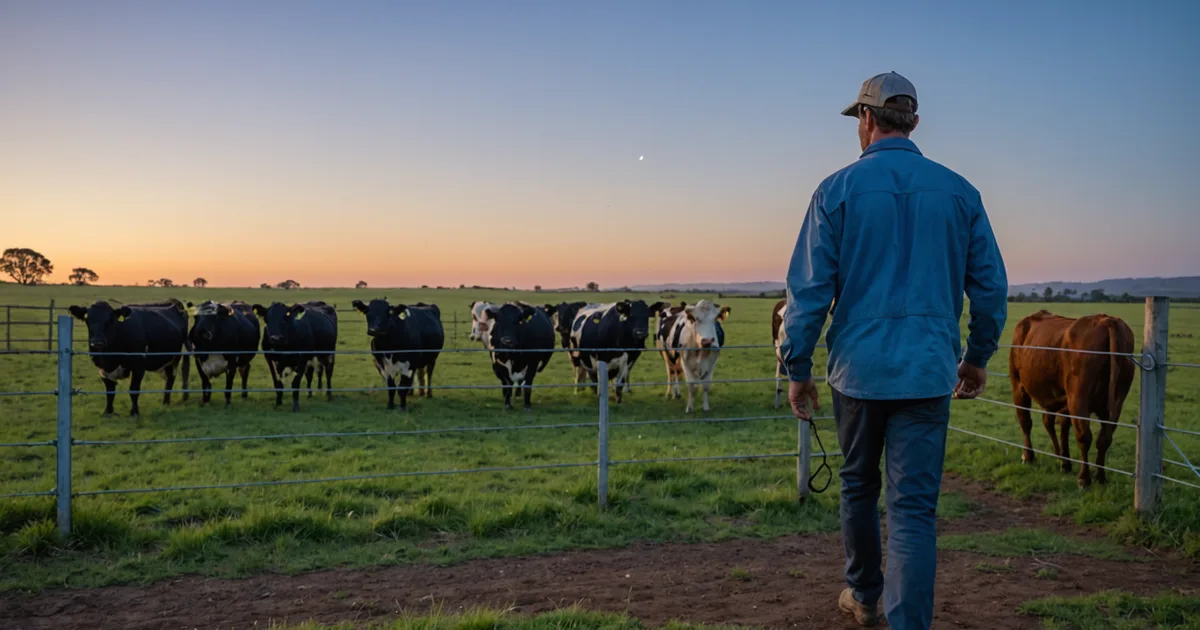
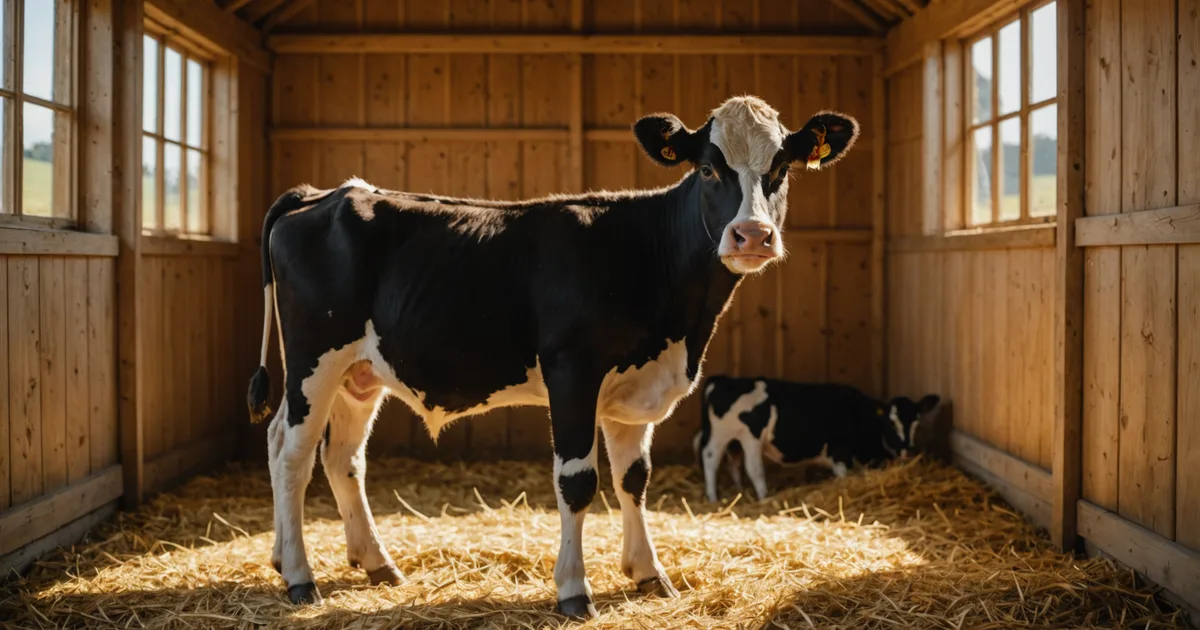
The calving interval is one of those metrics that dairy producers track on their records but sometimes treat as an outcome rather than a cost. Average calving interval for a herd goes from 380 days to 395 days and the instinct is to note it, compare it to the Dairy Australia benchmark, maybe plan something for next joining. What is less often calculated is the direct dollar figure that extra 15 days represents, multiplied across every cow in the herd.
When we worked through the economics with producers in a pilot group across south-west VIC, the number that surprised most people was not the per-cow figure but the fleet figure across a 200-cow herd. A single day of extended calving interval, on average, costs roughly $5 to $8 per cow in lost milk production and feed overhead, depending on the milk price and feeding system. Extend the average interval by 15 days across 200 cows and you are looking at $15,000 to $24,000 per year in margin that has evaporated. Not through any dramatic failure, just through a reproduction program running slightly below optimal.
What the Calving Interval Actually Measures
Calving interval is the number of days from one calving to the next. The target in a well-managed seasonal or split-calving Australian herd is usually 365 days, with 380 days considered acceptable and anything above 400 days a signal that the reproduction program needs attention. The internal structure of that interval is: voluntary waiting period (typically 42 to 60 days post-calving), the mating window, conception, and pregnancy to term at roughly 280 days.
The mating window is where most of the variation enters. If a cow is not inseminated until her third or fourth oestrus cycle post-VWP rather than her first or second, the interval to conception can extend by 21 to 63 days. In a spring-calving herd with a tight 10 to 12 week joining period, a cow that misses joining entirely and is not picked up until late in the programme is effectively carrying the interval cost of a full extra cycle, sometimes two.
Breaking Down the Per-Day Cost
There are three cost components to each extra calving interval day: lost milk production, extended feed overhead, and additional A.I. costs. The proportions differ by herd type but the structure is consistent.
Lost milk production is the largest component. A dairy cow in the 150 to 250 days in milk range is in the middle portion of her lactation curve. She is no longer near peak but is still producing efficiently. Each extra day she remains open is a day her next lactation calves later in the season, which in a seasonal system usually means she calves into a different pasture growth window with a shorter effective lactation in the following year. The milk yield per day this costs the business depends on the current farm gate milk price. At prices seen across southern Australia in recent years, this component alone runs to around $3.50 to $6 per cow per extra day over target interval.
Feed overhead is a flat-ish cost that accumulates while the cow is open but that would have been partially recovered in early lactation had she conceived earlier. In a pasture-based system this is more variable than in a TMR feeding operation, but it is non-zero.
A.I. costs add up faster than most producers realise at the herd level. Each A.I. straw for a good Holsteins genetics sire runs from approximately $25 to $80 depending on sire selection. Add the technician call-out fee, which in regional VIC typically ranges from $5 to $15 per cow depending on booking volume. A cow that requires three A.I. attempts before conception represents $90 to $285 in direct A.I. costs at the top end, compared to $30 to $95 for a cow that conceives first service. The conception rate is where this cost multiplies: a herd running 45% first-service conception rate versus one running 60% is performing two A.I. attempts on a larger proportion of its cows every year.
The Compounding Effect Over Three to Five Years
One-year calving interval economics are significant. But the compounding effect over a cow's productive life is larger still, and it is the figure that tends to shift producer thinking from "interesting problem" to "we need to fix this now".
A cow with a consistent 395-day calving interval has 5.5 calvings across a seven-year productive life compared to 6.4 calvings for a cow consistently hitting 365 days. That is nearly one less lactation per cow. At average lifetime milk production of roughly 7,000 litres per lactation for a mid-range Australian Holstein herd, the lifetime production difference per cow exceeds 6,000 litres. At $0.50 per litre farm gate, that is over $3,000 per cow across her life attributable, at least in part, to the calving interval drift.
We are not saying that calving interval is the only driver of that lifetime figure. Culling policy, mastitis, lameness, and voluntary culling for genetic upgrade all influence the number of productive years a cow contributes. But reproduction efficiency is the variable most directly in a farm manager's control, and it is one where a systematic improvement in heat detection compounds across the full herd over time.
Where Missed Heat Events Fit In
The calving interval extends for two primary reasons: late conception due to low first-service conception rate, and missed oestrus events that push a cow's insemination date out beyond where it should have occurred. These are related but distinct problems.
Low first-service conception rate is an animal health and semen handling issue: nutrition, body condition at joining, semen quality, technician technique. An Ovum breeding window prediction does not improve conception rate in that mechanical sense. What it does is reduce the second contributor: missed oestrus events that mean a cow reaches her second or third cycle before anyone inseminates her, adding 21 to 42 days to her interval before conception is even attempted.
The heat detection rate, sometimes called submission rate, is the proportion of cows eligible for A.I. that are actually inseminated each week during the joining period. In herds relying on twice-daily visual observation, submission rates often run to 60 to 75% of eligible cows per cycle. With collar-based detection systems, submission rates in the 85 to 95% range are achievable for herds with good record-keeping and collar coverage. That 15 to 25 percentage point difference in submission rate is directly reflected in calving interval, because cows not submitted in the first cycle of their eligibility roll into a second or third cycle.
Calculating Your Herd's Interval Cost
If you want to estimate the calving interval cost for your herd specifically, the Ovum dashboard includes a reproduction economics tab that calculates this from your own herd records once collars are running. It uses your current average calving interval, your herd size, your milk price, and your A.I. cost per attempt to estimate an annual cost of the gap between your current interval and a 365-day target. The figures are built from your records rather than industry averages, so they reflect the specific economics of your operation.
What that calculation typically shows is that the cost of extended calving interval is not a rounding error. For a 200-cow herd running at 390 days versus 365 days average, the annual figure is usually in the range of $20,000 to $35,000 in margin foregone, depending on milk price and A.I. cost assumptions. That is the context in which any investment in reproduction program improvement, whether through better heat detection tools, veterinary interventions, or both, should be evaluated.
A Note on What Detection Improvement Cannot Do
Better heat detection improves submission rate and reduces the missed-oestrus contribution to extended calving interval. It does not fix conception rate, which is limited by cow health, semen quality, and timing accuracy at insemination. Farms that improve their submission rate without addressing the conception rate will see calving interval improve, but the gain will be partial. If your herd is running a first-service conception rate below 45%, the economics of additional A.I. attempts may warrant a veterinary conversation about synchronisation protocols or nutrition review before the next joining, regardless of how good your heat detection rate becomes. Reproduction is a system. Calving interval is the output of the whole system, not one component of it.